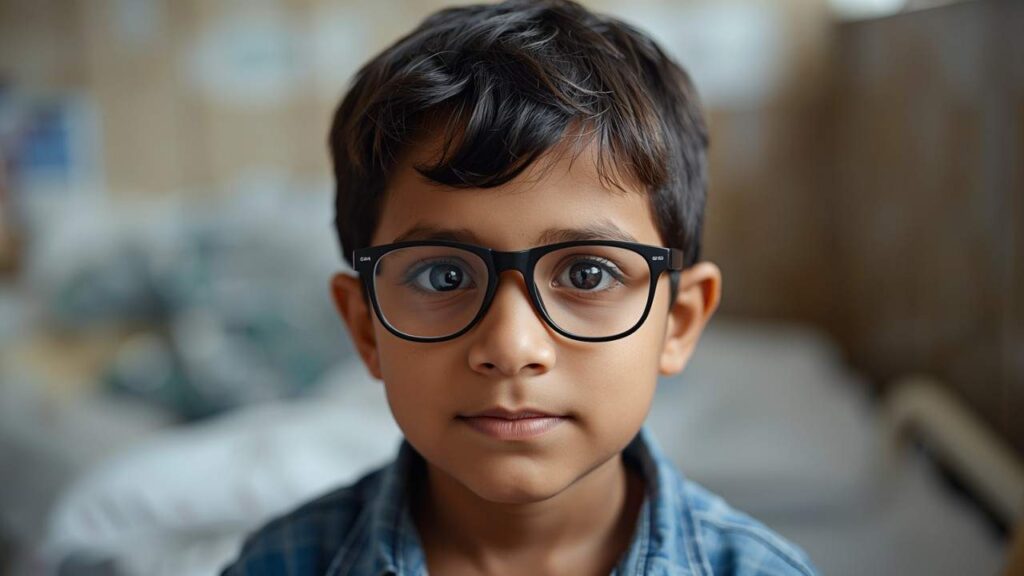
Ortho-K myopia control for children in Pakistan. More and more parents in Pakistan are worried because their children’s “number” (myopia) keeps increasing every year. Glasses correct the vision, but they do not slow the progression of myopia, and many children dislike wearing them for sports and daily activities.
Orthokeratology, often called “Ortho‑K,” is a non‑surgical, overnight contact lens treatment that both corrects vision during the day and can slow down the worsening of myopia in children. In this guide, we explain what Ortho‑K is, how it works, its safety, and what Pakistani parents should know before considering it.
What Is Ortho‑K / Orthokeratology?
Orthokeratology (Ortho‑K) uses specially designed rigid gas‑permeable contact lenses that your child wears only while sleeping.
-
These lenses gently reshape the front surface of the eye (the cornea) overnight.
-
In the morning, your child removes the lenses and can see clearly during the day without glasses or daytime lenses.
-
The effect is temporary and reversible; if your child stops wearing the lenses, the cornea gradually returns to its original shape.
Ortho‑K is sometimes marketed under names like “Corneal Refractive Therapy” (CRT), “Vision Shaping Treatment” (VST), or “Gentle Vision Shaping,” but the principle is the same.
How Ortho‑K Helps Control Children’s Myopia
Traditional glasses and soft contact lenses make vision clear, but they do not slow the eye’s axial growth, so the “number” often continues to increase each year.
Research on Ortho‑K shows that it can reduce myopia progression by around 40–60% compared with standard glasses or single‑vision contact lenses:
-
A large evidence review found that Ortho‑K slows myopia progression by about 50% on average. Clinical trials like the ROMIO study reported more than 60% reduction in myopia progression over two years compared with children in regular spectacles.
-
A 2023 meta-analysis concluded that Ortho‑K significantly reduces both diopter change and axial length growth in myopic children over two years.
By slowing the rate of increase, Ortho‑K can help reduce the risk of future complications linked with high myopia, such as retinal detachment, macular changes, and glaucoma.
Is Ortho‑K Safe for Children?
Safety is the first question every parent in Pakistan asks, and it is the right question.
What the research says
-
A large long‑term study of 300 Ortho‑K patients (including children) found that Ortho‑K was a safe and predictable procedure, with a very low incidence of serious complications.
-
Microbial keratitis (a serious corneal infection) occurred at a rate of about 7 cases per 10,000 patient‑years, and no cases were reported in children in that series.
-
A 2021 systematic study on children concluded that Ortho‑K is a safe option for myopic children; most adverse events were mild, such as corneal staining, and resolved without long‑term vision loss.
-
Another clinical review found that 10–20% of children may experience minor adverse events (like temporary staining or discomfort), but fewer than 10% were directly lens‑related, and most resolved without affecting best‑corrected vision.
In simple words: when fitted by a trained eye care professional and used with strict hygiene, Ortho‑K has a good safety record in children.
Is Ortho-K Available in Pakistan?
Yes, Ortho‑K has been introduced in Pakistan and is available in selected centers:
-
A feature in The Express Tribune described Ortho‑K being offered in Lahore’s Y‑Block market as a nighttime, non‑surgical alternative to LASIK for myopia, including children.
-
A dedicated Ortho‑K blog notes that orthokeratology is now available in many countries, including Pakistan, presented as a reversible alternative to laser surgery.
-
Social media posts from optical practices in Karachi also promote Ortho‑K as a new myopia‑control option for progressive myopia.
At present, services are mostly in major cities and often in private or specialty practices, so availability and experience may vary between centers.
Which Children in Pakistan Are Good Candidates?
Ortho‑K is not for every child, but it can be an excellent option when chosen carefully.
Typical candidate profile from international and clinical guidelines:
-
Age: Usually from around 6–7 years and above, when the child can cooperate with lens handling and hygiene.
-
Degree of myopia: Often effective up to about 4.00 to –6.00 diopters of myopia, sometimes more, depending on corneal shape and practitioner experience.
-
Astigmatism: Mild to moderate astigmatism may be treatable; high or irregular astigmatism needs individual assessment.
-
Eye health: Clear corneas, healthy tear film, no active allergies or significant dry eye.
-
Motivation & hygiene: The child and parents must be willing to follow strict cleaning, nightly wear, and regular follow‑up visits.
Children who play sports, swim regularly, or dislike glasses but whose myopia is increasing are often strong candidates.
Children not suited to Ortho‑K may include those with poor hygiene, recurrent eye infections, uncontrolled allergies, or corneal disease or those unable to cooperate with lens care.
What Happens During an Ortho‑K Fitting?
If you visit an eye specialist or optometrist offering Ortho‑K in Pakistan, a typical process looks like this:
-
Comprehensive eye exam
-
Full vision test and refraction (number).
-
Detailed corneal health check with a slit lamp.
-
Measurement of eye pressure and retina (especially if high myopia).
-
-
Corneal topography
-
A special machine maps the shape of your child’s cornea to design custom lenses.
-
-
Lens design and trial
-
The practitioner orders customized gas‑permeable Ortho‑K lenses.
-
On the first night of wear, your child may be reviewed the next morning to check fit and corneal response.
-
-
Training for parents and child
-
How to put lenses in and take them out safely.
-
How to clean, disinfect, and store lenses every day.
-
What warning signs (pain, redness, blurred vision) mean you should remove the lenses and call the clinic.
-
-
Follow‑up schedule
-
Several visits in the first weeks to fine‑tune fit and confirm results.
-
Regular 3–6‑monthly reviews to monitor corneal health and myopia progression.
-
Ortho‑K vs Glasses vs LASIK for Children
Below is a quick comparison, especially relevant for parents in Pakistan who are thinking about “something better than glasses”:
For most Pakistani children, LASIK is not recommended; Ortho‑K offers a non‑surgical middle ground between glasses and future surgery.
Risks and Limitations Parents Should Know
No treatment is risk‑free. Important points:
-
Mild complications are relatively common (up to 10–20% per year) and can include corneal staining, mild inflammation, or discomfort usually reversible with prompt care.
-
Serious infection (microbial keratitis) is rare but can threaten vision if hygiene is poor or symptoms are ignored; estimated rates are in the single digits per 10,000 patient‑years in published series.
-
Children with high myopia, younger age, and allergic conjunctivitis have a slightly higher risk of corneal adverse events and must be monitored more closely.
-
The treatment is maintenance‑based: lenses must be worn regularly (usually nightly) to keep the effect; stopping use allows the myopia to return to its baseline level.
-
Cost: In Pakistan, Ortho‑K has been described as relatively expensive, with one report quoting around Rs 60,000 for lenses lasting about three years, though prices will vary by clinic and brand.
Honest discussion with a qualified practitioner about risks, benefits, and costs is essential before deciding.
Questions Pakistani Parents Should Ask Before Starting Ortho-K
Before committing, consider asking the eye specialist:
-
How many children have you successfully fitted with Ortho‑K?
-
What myopia range and astigmatism do you usually treat with these lenses?
-
What specific myopia‑control effect (slowing percentage) do you quote based on current evidence?
-
How will you monitor my child’s axial length or prescription over time?
-
What is your emergency protocol if my child develops pain, redness, or blurred vision at night?
-
What are the total costs (lenses, solutions, and follow‑ups), and how often do lenses need replacement?
Clear answers will help you decide if Ortho‑K is a realistic and safe option for your family.
When Might Ortho-K Be a Good Choice in Pakistan?
Ortho‑K may be worth considering if:
-
Your child’s myopia is increasing rapidly each year.
-
Your child is active in sports and dislikes glasses or has trouble with daytime contact lenses.
-
You want a non‑surgical method that both corrects vision and slows myopia progression.
-
You live in or can travel to a major city (like Lahore, Karachi, or Islamabad) where an experienced Ortho‑K fitter is available.
-
Your family can reliably follow the hygiene and follow-up schedule needed to keep treatment safe.
If these conditions are not met, your doctor may recommend other myopia‑control options (specialized soft lenses, low‑dose atropine, or lifestyle changes) instead of Ortho‑K.
Final Thoughts: A Promising, But Specialized, Option
Orthokeratology is an exciting non‑surgical, reversible method that can both correct children’s daytime vision and significantly slow the progression of myopia, with a good safety profile when properly monitored.
In Pakistan, Ortho‑K is still a specialized service, mainly available in big cities and private centers, so it requires careful choice of practitioner, strong hygiene, and committed follow‑up. If your child’s number is rising quickly and you are exploring options beyond regular glasses, a detailed consultation with an experienced eye‑care professional about Ortho‑K may be a valuable next step.