
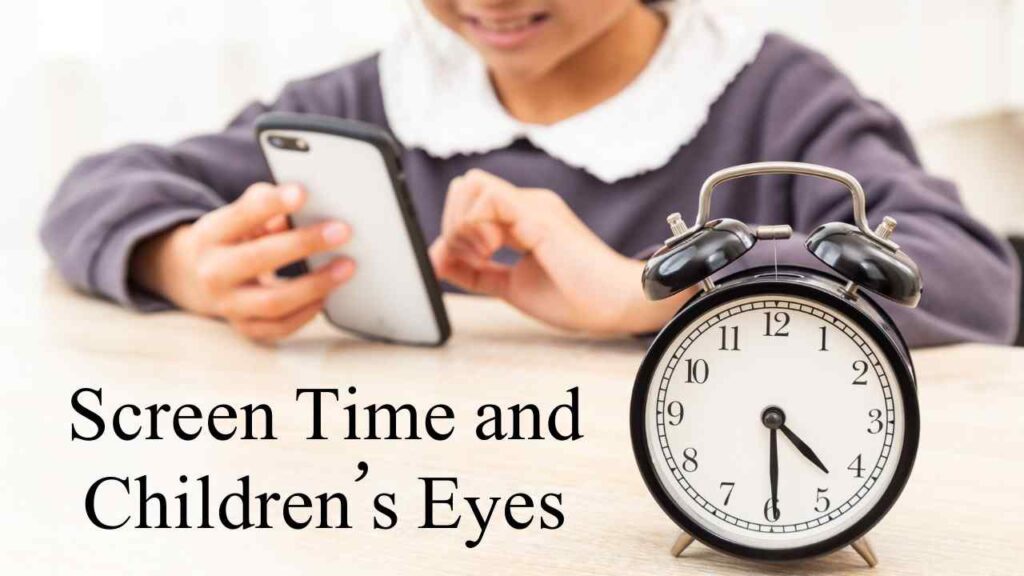
In Pakistan, children are spending more time than ever on mobile phones, tablets, laptops, and TVs. Online classes, gaming, YouTube, and social media have quietly turned screen time into a daily habit even for very young kids.
This constant digital exposure can affect children’s eyes, learning, sleep, and overall health. As a parent in Pakistan (especially in big cities like Lahore, Karachi, and Islamabad), you must know the early warning signs that your child’s eyes are under strain so you can take action in time.
How Screen Time Affects Children’s Eyes
Screens are not “evil,” but too much, too close, and without breaks can harm children’s visual comfort and development.
-
Increased eye strain: Focusing on near screens for long periods makes the eye muscles work continuously, leading to tired, achy eyes.
-
Dryness and irritation: Children blink less when they stare at screens, which dries the eye surface and causes burning or redness.
-
Rising myopia (short-sightedness): Long near work and less outdoor play are strongly linked with earlier and faster onset of myopia.
-
Sleep disruption: Blue light exposure late at night disturbs sleep patterns, which also affects eye comfort and performance in school.
Warning Signs Parents Must Not Ignore
If you notice any of these signs, treat them as a red flag and not “normal childhood behavior”:
-
Your child sits very close to the TV or holds phones/tablets very close to the face.
-
Frequent squinting, head tilting, or closing one eye while watching screens or reading.
-
There have been complaints of headaches, eye pain, or “heavy eyes” following study sessions or prolonged mobile use.
-
Individuals may experience redness, watering, or constant rubbing of their eyes, particularly during or after screen time.
-
Difficulty seeing the board at school or copying from it accurately.
-
A sudden decline in academic performance or a lack of interest in reading and homework may also be observed.
-
There have been complaints about “words moving” or “lines doubling” during reading sessions.
These can indicate an uncorrected glasses number, digital eye strain, or even more serious eye issues that need a specialist’s opinion.
Short-Sightedness (Myopia) in Pakistani Children
Myopia is increasing worldwide and is being seen more often and at younger ages in Pakistan. It usually starts in school-age children and progresses through teenage years.
Possible signs of myopia in your child:
-
Your child may be drawn closer to the TV or whiteboard as they grow older.
-
Struggling with distance vision (signboards, faces across the room).
-
Choosing to sit in the front row can help you see clearly.
Untreated myopia not only affects learning but, if it becomes very high, can increase the risk of retinal complications later in life. Early diagnosis and proper glasses help slow the problem and protect sight.
Digital Eye Strain in Children
Children often don’t have the words to describe what they feel. Instead of saying “digital eye strain,” they may say:
-
“My eyes hurt.”
-
“I would rather not read anymore.”
-
“I’m exhausted” soon after starting homework or online classes.
Digital eye strain in kids is typically shown as:
-
Burning, gritty, or stinging sensation.
-
Tearing or dryness.
-
Trouble focusing between book, screen, and distant objects.
If these appear regularly after mobile or laptop use, it’s time to change habits and get a detailed eye checkup.
Red Flags That Need Immediate Eye Specialist Visit
Some symptoms need urgent assessment and should not be delayed or treated with home remedies:
-
One eye turning inwards or outwards (squint).
-
Sudden double vision.
-
Sudden loss of vision or a dark area in part of the child’s vision.
-
Eye injury, chemical exposure, or severe eye pain.
In these cases, go straight to an eye specialist or eye hospital rather than a general physician or chemist.
Healthy Screen Time Rules for Children in Pakistan
You do not have to ban screens completely, but you must set clear, consistent rules.
Suggested guidelines (you can adjust to your child’s age):
-
Avoid any routine screen time for children under 2 years (except occasional supervised video calls with family).
-
For ages 2–5: Try to keep recreational screen time to around 1 hour a day, high-quality content, and always supervised.
-
For school-going children:
-
Limit non-school/recreational screen time to 1–2 hours a day.
-
Break long online study sessions with short, offline breaks.
-
General rules for all ages:
-
No screens during meals and family conversations.
-
No mobile or tablet use in bed, especially with lights off.
-
Keep devices at least an arm’s length from eyes where possible.
Simple Home Steps to Protect Your Child’s Eyes
You can make big changes with small daily habits:
-
Teach the 20–20–20 rule: Every 20 minutes, look 20 feet away for at least 20 seconds.
-
Create a study setup: chair and table at the right height, screen slightly below eye level, and good room lighting.
-
Encourage at least 1–2 hours of outdoor play daily (where safe) natural light and distance viewing help eye development.
-
Make sure your child sleeps on time poor sleep worsens eye strain and concentration.
-
Remind them to blink fully when using screens to reduce dryness.
Importance of Regular Eye Checkups for Children
Many parents in Pakistan only take their child for an eye test when the school complains. This is too late in many cases.
Good practice:
-
First professional eye exam by age 3–4, or earlier if you suspect a problem.
-
Before starting school, then every 1–2 years during school age.
-
More frequent visits if your child already wears glasses, has a squint, or has a family history of strong numbers or lazy eye.
A detailed pediatric eye exam includes checking vision, glasses number, eye alignment, eye health, and sometimes eye drops to relax focusing before testing.
Choosing the Right Eye Specialist or Eye Clinic
When taking your child for an eye checkup:
-
Look for an eye specialist (ophthalmologist) with experience in children’s eyes or a pediatric ophthalmologist if available.
-
Make sure the clinic/hospital:
-
Has child-friendly staff and environment.
-
Uses proper charts and tools suitable for children.
-
Takes time to explain the problem and treatment plan to you calmly.
-
If cost is an issue, ask if the hospital has welfare, zakat, or low-cost packages for children’s eye care.
When You Need Glasses for Your Child
If the doctor prescribes glasses:
-
Take it seriously glasses do not weaken the eyes; they help them function properly.
-
Let your child choose a comfortable frame they like, so they are more willing to wear it.
-
Ensure the frame fits well and lenses are of good quality.
-
Follow the doctor’s advice on how many hours a day the child should wear the glasses.
For some conditions (like lazy eye), treatment might also include patching one eye follow timing instructions carefully to get the best results.
Final Thoughts: Be Your Child’s Eye Guardian
Children cannot protect their own eyes they need parents, teachers, and doctors to notice early warning signs. In today’s screen-filled world, this responsibility is even bigger for families in Pakistan.
If you see your child struggling with screens, sitting too close, rubbing eyes, or complaining of headaches, don’t just reduce brightness or buy random eye drops. Set healthy screen rules, encourage outdoor play, and book a proper eye checkup with a qualified eye specialist. Early action today can protect your child’s vision, confidence, and future.