
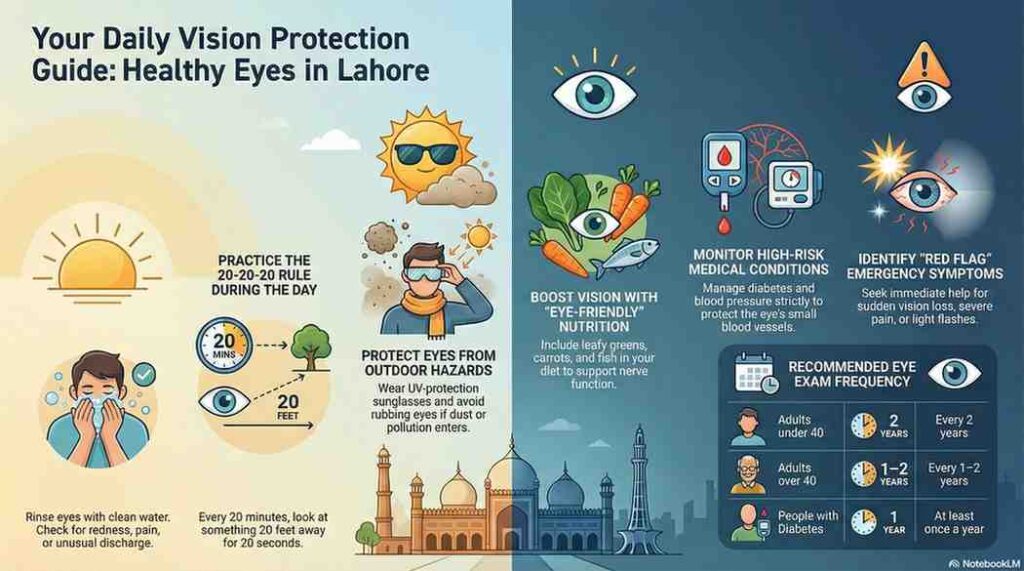
From dusty roads and bright sunlight to long hours on mobile and computer screens, daily life in Lahore can be tough on your eyes. Many people only think about eye health when their vision becomes blurry or painful, but by then, serious damage may already have started.
This blog shares an easy, step‑by‑step daily routine and lifestyle tips to keep your eyes healthy in Lahore and across Pakistan, so you can protect your vision before problems begin.
Morning: Start Your Day with Healthy Eye Habits
Your eye care routine can begin as soon as you wake up.
-
Wash your eyes gently: Use clean water to rinse the area around your eyes; do not rub hard or use harsh soaps near the eyes.
-
Check for redness or discharge: If you notice persistent redness, pain, or sticky discharge in the morning, plan a visit to an eye specialist in Lahore instead of ignoring it.
-
Take your systemic medicines on time: If you have diabetes, blood pressure, or cholesterol issues, controlling them protects the small blood vessels in your eyes.
Starting the day with simple checks helps you catch early signs of trouble.
During the Day: Protect Your Eyes at Work, School, and Outside
Whether you work in an office, study at school, or stay outdoors most of the time, your eyes need protection.
For screen users (mobile, computer, tablet)
-
Follow the 20‑20‑20 rule: Every 20 minutes, look at something about 20 feet away for at least 20 seconds to relax your eye muscles.
-
Keep screens at arm’s length: Maintain a comfortable viewing distance and keep screens slightly below eye level.
-
Use proper lighting: Avoid reflections and harsh glare by adjusting room lights and screen brightness.
These steps reduce digital eye strain, which is increasingly common in urban Pakistan.
For outdoor workers and commuters
-
Wear sunglasses with UV protection: This helps protect against UV rays that contribute to cataracts and other eye problems over time.
-
Protect from dust and pollution: Use glasses or sunglasses on busy roads or in construction areas to reduce irritation and infection risk.
-
Avoid rubbing your eyes: if dust gets in, rinse gently with clean water; rubbing with dirty hands can cause infections.
Small protective measures during the day can prevent big problems later.
Food and Nutrition for Eye Health
What you eat has a direct impact on your eyes. Experts recommend a balanced diet that supports overall and eye health.
Try to include:
-
Green leafy vegetables (spinach, saag), carrots, and colored fruits (oranges, mangoes) for vitamins A and C.
-
Fish, nuts, and seeds for healthy fats that support eye and nerve function.
-
Plenty of water to stay hydrated and reduce dryness of eyes.
If you have diabetes, following your doctor’s diet plan carefully helps prevent diabetic retinopathy and related eye complications.
Evening and Night: Resting Your Eyes Properly
Your eyes need proper rest just like the rest of your body.
-
Reduce bright screens at night: Avoid very bright mobile or laptop use in dark rooms before sleeping, as it strains your eyes and can disturb sleep.
-
Remove contact lenses on time: Never sleep in lenses unless your doctor has clearly approved a specific type; this reduces the risk of infection.
-
Give your eyes a break: If your eyes feel tired, close them for a few minutes in a quiet, dark room to relax eye muscles.
Quality sleep supports healthy tears and reduces next‑day irritation.
Special Tips for People with Diabetes and High Blood Pressure
In Pakistan, diabetes and hypertension are major risk factors for vision loss.
If you have these conditions:
-
Control sugar and blood pressure with medicines, diet, and exercise as advised.
-
Get a detailed eye exam at least once a year, even if your vision seems fine.
-
Ask your eye specialist about diabetic retinopathy and glaucoma screening.
Early detection and control can save your sight even after many years of diabetes.
Children’s Eye Health – Habits for Parents and Schools
Healthy eyes in childhood protect learning and development.
Parents and teachers in Lahore should:
-
Watch for signs like sitting too close to the TV, squinting, frequent headaches, or poor school performance.
-
Limit continuous screen time and encourage outdoor play with proper sun and dust protection.
-
Arrange regular eye checkups for school‑age children, especially if there is a family history of eye problems.
Treating refractive errors and squints early can prevent long‑term vision issues and improve academic results.
Warning Signs You Should Never Ignore
Daily eye care is important, but some symptoms require urgent professional attention.
Visit an eye specialist or eye hospital immediately if you notice:
-
Sudden loss of vision in one or both eyes.
-
Severe eye pain, redness, or swelling.
-
Flashes of light, many new floaters, or a “curtain” over your vision.
-
An injury or chemical exposure to the eye.
Quick treatment in these cases can be the difference between recovery and permanent damage.
How Often Should You Get Your Eyes Checked in Lahore?
Experts recommend:
-
Children: At key stages of schooling or earlier if problems are suspected.
-
Adults up to 40: Every 2 years, or earlier if you notice symptoms.
-
Adults over 40: Every 1–2 years, to screen for glaucoma, cataracts, and age‑related changes.
-
People with diabetes or a strong family history of eye disease: At least once a year, or as your eye specialist advises.
In Lahore, many hospitals and clinics offer affordable packages for detailed eye checkups that include refraction, pressure measurement, and retinal exams.
When and How to Use Charity or Low-Cost Services
If cost is a concern, do not wait until your vision is very poor. Lahore has charity eye hospitals and community programs that provide:
-
Free or subsidized eye checkups and glasses.
-
Low‑cost or free cataract surgeries for eligible patients.
-
Support for cornea transplants and other complex treatments through donations and zakat.
Ask the hospital’s welfare or zakat desk about available options, and bring any financial documents they request to assess support.
Final Thoughts: Make Eye Care Part of Your Daily Life
Healthy eyes are not maintained by one big step but by many small, consistent habits: washing your eyes gently, using screens wisely, eating well, getting enough sleep, and scheduling regular checkups.
By following a simple daily eye care routine and visiting an eye specialist in Lahore when needed, you protect your vision, your independence, and your quality of life. Start today with one small change, and your eyes will thank you for years to come.