

Introduction:
Signs you need an eye checkup are your body’s way of flagging that something in your visual system needs attention before a manageable problem becomes a permanent one. Most people ignore these signals for months, assuming eye fatigue from screens is the culprit. Sometimes it is. Often, it isn’t.
According to the Pakistan National Blindness and Visual Impairment Survey (IOVS, 2006), 27% of Pakistani adults aged 30 and above had a presenting visual acuity worse than 6/12, meaning significantly impaired vision. Yet, the majority had never visited an eye specialist. Refractive error, the single most correctable cause of vision loss, was responsible for the largest share of that impairment.
That’s the part that should stop you mid-scroll.
What “Needing an Eye Checkup” Actually Means
Before listing the signs, let’s be precise. An eye checkup is not just a vision test. A comprehensive eye examination at a facility like Lions Medical Complex (Hudson Silva Lions Eye Hospital, Gulberg, Lahore) includes:
- Visual acuity measurement (the standard letter chart test)
- Refraction assessment to detect nearsightedness, farsightedness, or astigmatism
- Slit-lamp examination of the cornea, lens, and anterior eye structures
- Intraocular pressure (IOP) measurement to screen for glaucoma
- Retinal evaluation through dilated fundus examination
To get a proper eye checkup at Lions Medical Complex, follow these steps:
- Visit Hudson Silva Lions Eye Hospital in Gulberg, Lahore before 11 AM on a weekday.
- Inform reception of your specific symptoms don’t just say “my eyes hurt.”
- Undergo the full examination including slit-lamp and pressure tests, not just refraction.
- Ask the ophthalmologist directly whether a dilated retinal exam is needed for your case.
Quick note: The difference between an optometrist and an ophthalmologist matters here. An ophthalmologist is a medical doctor who can diagnose eye disease, prescribe treatment, and perform surgery. An optometrist tests vision and prescribes corrective lenses. For symptom-based concerns, you want the former.
The 10 Signs Your Eyes Are Telling You Something
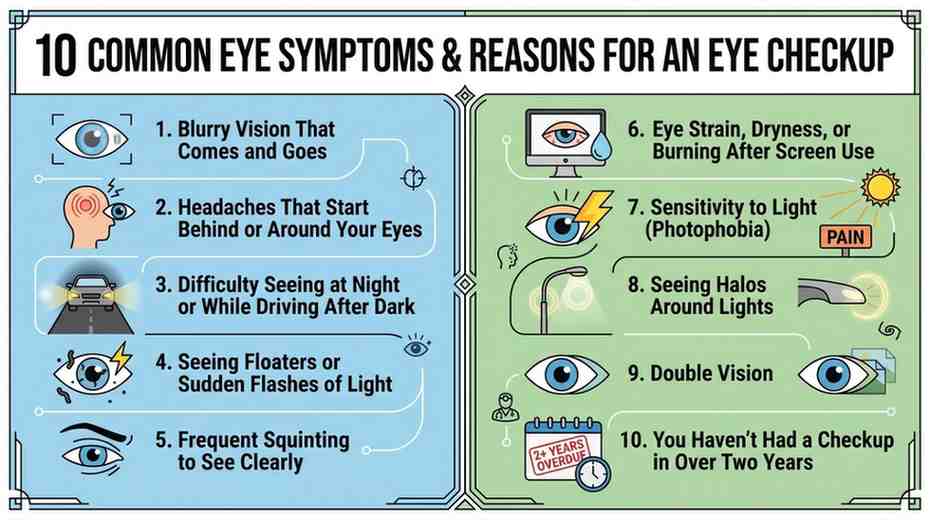
1. Blurry Vision That Comes and Goes
Occasional blur after staring at a screen for two hours is normal. Blur that appears when you look up from your phone, persists for several minutes, or affects only one eye that’s different.
Intermittent blurry vision can indicate early myopia progression, astigmatism, or diabetic retinopathy in patients with undiagnosed or poorly controlled blood sugar. In Pakistan, where Type 2 diabetes prevalence is among the highest in South Asia, this symptom deserves particular attention and not a wait-and-see approach.
Don’t self-diagnose this one.
2. Headaches That Start Behind or Around Your Eyes
Most people assume headaches mean stress or dehydration. That’s valid sometimes. But if your headaches consistently appear after reading, working on a screen, or driving, the more likely explanation is uncorrected refractive error or eye muscle imbalance (convergence insufficiency).
Your eyes are working harder than they should to bring images into focus. That sustained muscle tension travels upward. The headache isn’t in your head it’s in your eyes’ inability to focus without strain.
Or maybe I should say it this way: your glasses or contact lenses prescription may simply be outdated, and your eyes are compensating every hour of the day.
3. Difficulty Seeing at Night or While Driving After Dark
Night blindness isn’t just inconvenient. It’s one of the earliest detectable signs of developing cataracts or vitamin A deficiency-related retinal dysfunction. If oncoming headlights feel blinding, or if you’re slowing down significantly when driving after sunset, your visual system is flagging something.
Here’s the thing: cataracts are the leading cause of blindness in Pakistan, accounting for the majority of cases in the national blindness surveys. Caught early, they’re surgically correctable with excellent outcomes. Ignored for years, they complicate treatment significantly.

4. Seeing Floaters or Sudden Flashes of Light
Floaters those small specks, threads, or cobweb shapes drifting across your field of vision are usually harmless bits of vitreous gel that have clumped with age. Most people have them. Most don’t need treatment.
The exception is sudden onset. If floaters appear dramatically and all at once, or if you see flashes of light in the peripheral vision, this is a potential retinal tear or detachment a medical emergency. Same-day evaluation is required, not a scheduled appointment next week.
I’ve seen conflicting data on how quickly retinal detachments progress some sources suggest hours, others days before irreversible damage. My read is this: don’t test that timeline. Go the same day.
5. Frequent Squinting to See Clearly
Squinting narrows the aperture of light entering the eye, temporarily sharpening an image the way a pinhole does. It’s an instinctive compensation for refractive error myopia most commonly.
If you’re squinting to read road signs, recognize faces across a room, or see the board in a meeting, you either need glasses, need a stronger prescription, or haven’t had a checkup in long enough that your vision has shifted without you noticing.
Squinting daily is not normal. It’s a workaround.
6. Eye Strain, Dryness, or Burning After Screen Use
Digital eye strain is real and common. But there’s an important distinction most articles skip: eye strain that resolves within 20–30 minutes of screen rest is likely digital fatigue. Eye strain that persists into the evening, accompanies redness, or comes with a burning or gritty sensation is more likely dry eye disease a clinical condition that worsens without treatment.
Look if you’re using lubricating drops every single day and your eyes still feel raw by 4 PM, the drops are masking a symptom, not solving it. A slit-lamp examination can assess your tear film quality and tell you whether you need targeted dry eye treatment rather than over-the-counter lubricants.
Quick comparison:
| Symptom | Likely Cause | What To Do |
|---|---|---|
| Strain that clears after screen break | Digital eye fatigue | 20-20-20 rule, reassess in 2 weeks |
| Persistent dryness + burning | Dry eye disease | Formal checkup, tear film assessment |
| Redness + discharge | Eye infection | Urgent same-day evaluation |
| Strain + headache after reading | Refractive error / convergence issue | Scheduled eye exam within 2 weeks |
| Any of the above lasting 4+ weeks | Unknown needs diagnosis | Book a checkup immediately |
Digital Fatigue vs. Dry Eye Disease: Digital fatigue resolves with rest and affects both eyes symmetrically. Dry eye disease is a chronic condition involving inadequate tear production or quality, persisting regardless of screen time. The key difference is whether symptoms resolve fully with rest or continue throughout the day.
7. Sensitivity to Light (Photophobia)
Mild light sensitivity after coming in from darkness is normal eye adaptation. Persistent sensitivity where normal indoor lighting feels harsh, or sunlight causes significant discomfort even with sunglasses is not.
Photophobia is a common symptom of uveitis (inflammation inside the eye), corneal abrasion, or in some cases early-stage glaucoma. These are not conditions to manage with sunglasses alone.
8. Seeing Halos Around Lights
Halos those glowing rings around streetlights, headlights, or lamps are often reported by people who dismiss them as “just how lights look at night.”
They aren’t.
Halos are a classic indicator of cataracts or elevated intraocular pressure, both of which are progressive conditions. Glaucoma in particular is known as the “silent thief of sight” because peripheral vision loss happens gradually and painlessly until significant damage has already occurred. A 2024 glaucoma awareness study in Karachi (Pakistan Journal of Public Health) found that 9.6% of surveyed individuals had a confirmed glaucoma diagnosis and awareness of the condition remained low even among those affected.
9. Double Vision
Double vision seeing two images of a single object is never a symptom to rationalize away. It can result from relatively minor causes like astigmatism or dry eyes. It can also indicate muscle imbalance, neurological issues, or stroke when sudden.
Some experts argue that brief, transient double vision is often benign and resolves on its own. That’s valid when it lasts seconds during extreme fatigue. If it recurs, persists more than a few minutes, or appears suddenly in a person over 40, it requires same-day medical evaluation not an optometrist visit next month.
10. You Haven’t Had a Checkup in Over Two Years
This one isn’t a symptom. It’s a risk factor.
The American Optometric Association recommends annual eye exams for adults. In Pakistan, where awareness of preventive eye care remains low and access barriers are real, the practical guidance is this: every adult over 30 should have a comprehensive eye exam at minimum every two years, and annually if there is a family history of glaucoma, diabetes, or hypertension.
Your eyes don’t always warn you before something goes wrong. Glaucoma doesn’t hurt. Early diabetic retinopathy has no visible symptoms. The only way to catch these conditions before they cause permanent damage is to look for them before they announce themselves.
What Actually Happens During Your Checkup at Lions Medical Complex
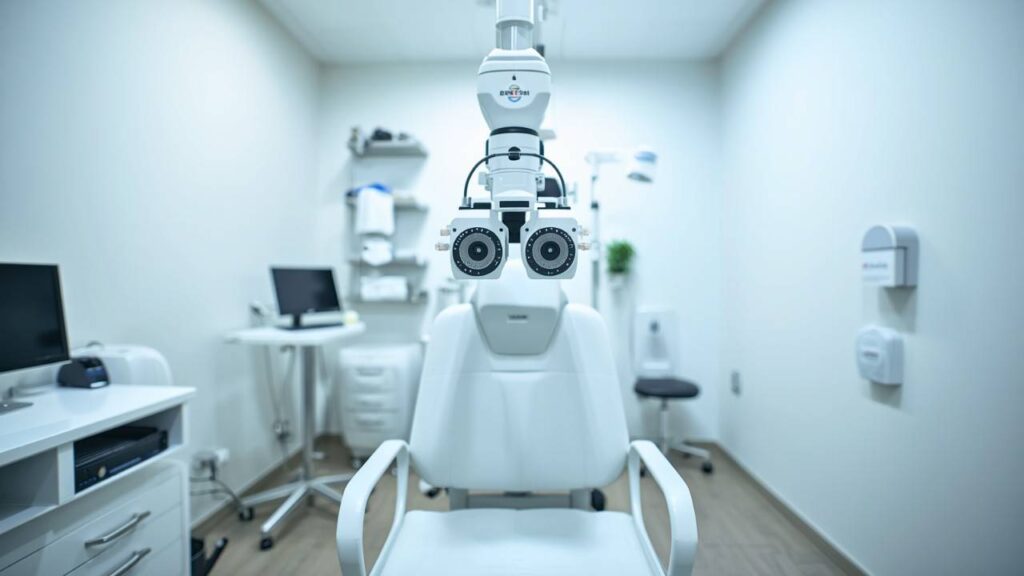
Many people delay checkups simply because they don’t know what to expect. Here’s what a comprehensive examination at Hudson Silva Lions Eye Hospital (Lions Medical Complex, Gulberg, Lahore) involves:
Visual acuity and refraction: You read a chart, the doctor measures how your eye bends light, and a prescription is determined if needed.
Slit-lamp examination: A microscope with a thin beam of light examines your cornea, lens, and anterior chamber in close detail. This is how early cataracts and corneal problems are detected.
Intraocular pressure test: A quick, painless measurement critical for glaucoma screening.
Retinal evaluation: Through a dilated pupil, the ophthalmologist examines the retina, optic nerve, and blood vessels. This is where diabetic retinopathy, macular changes, and early glaucoma damage become visible.
The entire process typically takes 45–90 minutes for a full examination. Lions Medical Complex advises patients to arrive before 11 AM for detailed eye checkups. For appointment options and doctor availability, Oladoc.com also lists Hudson Silva Lions Eye Hospital specialists with real-time booking.
This article covers outpatient diagnostic examinations. It does not address the surgical procedures (cataract surgery, cornea transplant, LASIK) available at Lions Medical Complex those require separate consultations.
Frequently Asked Questions
Q: What’s the best time to get an eye checkup in Lahore?
A: At Lions Medical Complex, detailed eye checkups are recommended before 11 AM on weekdays. Morning appointments allow time for dilated retinal exams, which require pupil dilation and recovery time afterward.
Q: How do I know if my blurry vision is serious or just screen fatigue?
A: If blur resolves fully within 30 minutes of rest, it’s likely digital fatigue. If it persists, affects one eye more than the other, or accompanies headaches, book a formal checkup within two weeks.
Q: Should I get an eye exam even if I don’t wear glasses?
A: Yes. Many serious eye conditions glaucoma, diabetic retinopathy, early cataracts have no symptoms in early stages. A checkup detects them before you notice anything wrong.
Q: Why does my eye doctor check my blood pressure during an eye exam?
A: The retinal blood vessels are directly visible during an eye exam and can reveal early signs of hypertension, diabetes, and cardiovascular disease often before other symptoms appear.
Q: When should I go to an emergency room instead of booking an appointment?
A: Seek emergency care immediately for sudden vision loss, a shower of new floaters with flashing lights, severe eye pain, chemical exposure to the eye, or double vision appearing suddenly after age 40.